Blog · 27 October 2026
Hair extension methods explained
Micro rings, nano rings, fusion bonds, tapes, wefts... Here's what each hair extension method actually is, and how to decide which ones to learn.
Browse any list of hair extension courses and you’ll meet a long list of method names: Micro Rings, Mini Tubes, Fusion Bonds, Easy Shrinks, Nano Rings, Tape-Ins, Celebrity Weave, Micro Ring Weft. It can feel like a new language. The good news is that almost every method falls into one of three families: strands, wefts and tapes. Once you understand the families, the course names start to make sense, and it becomes much easier to choose what to learn.
Strand methods
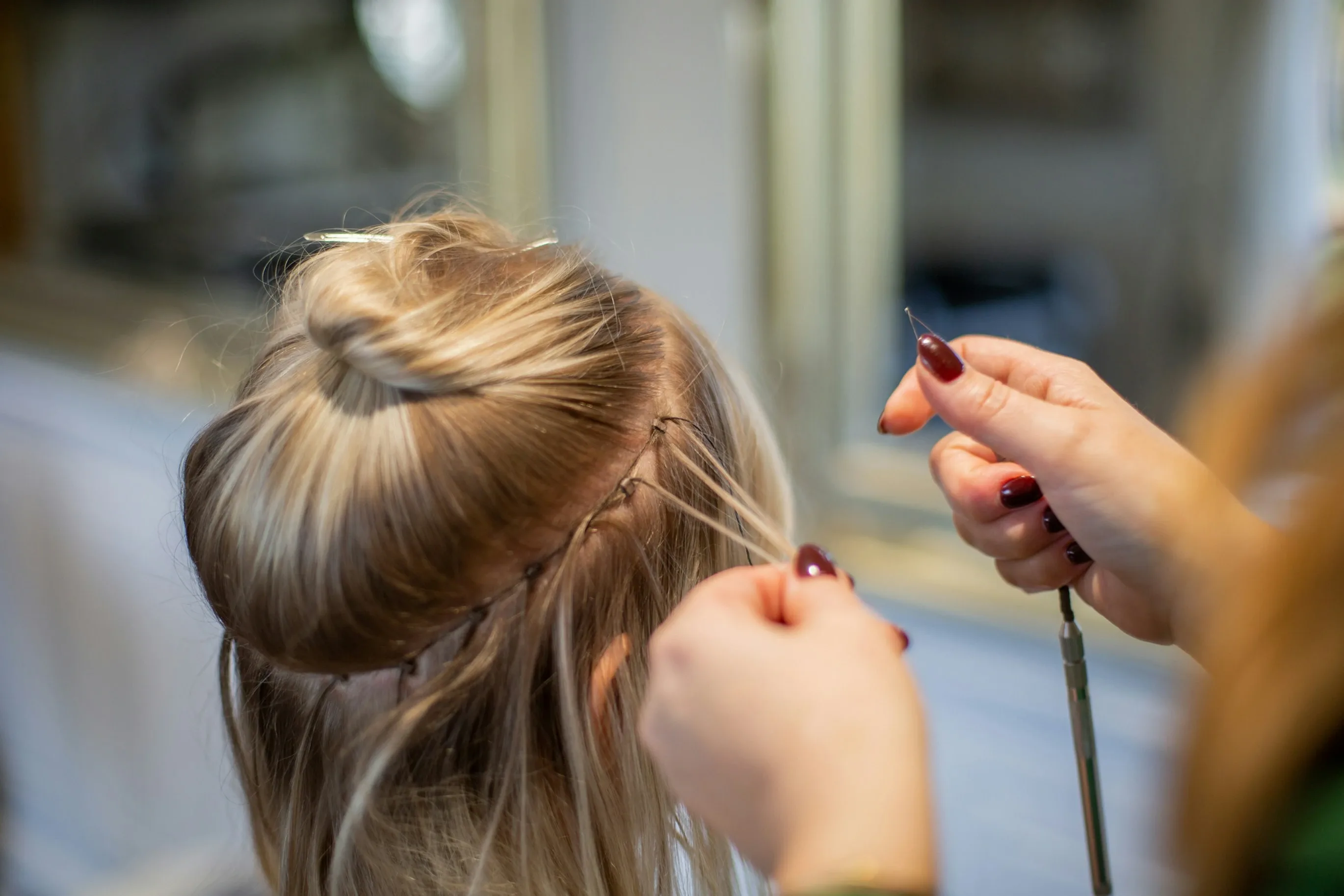
Strand methods attach small bundles of hair, one at a time, to small sections of the client’s natural hair. A full head usually takes between 100 and 200 strands, so application takes longer than with wefts, but the result is very natural and moves freely. Strands are the foundation of most beginner courses because they teach the core skills of sectioning, tension and placement.
Micro Rings (also called micro beads) clamp each strand to the natural hair with a small metal ring. There’s no glue or heat, and the rings can be opened and moved up the hair at maintenance appointments, which clients like.
Mini Tubes work in a similar way to micro rings, using a small metal cylinder instead of a ring. Many technicians find them quick to fit, and they sit flat against the head.
Nano Rings are a much smaller version of the micro ring. Because the ring is so small, it’s hard to see even in fine or thin hair. Nano rings take a little more precision to fit, so they’re often taught once the basic ring methods are in place.
Keratin Fusion Bonds fix each strand with a keratin bond that’s softened with heat and rolled around the natural hair. Bonds are small and flexible and suit clients who want a long-lasting result. Removal takes a solvent and some care, which you’ll learn on the course.
Easy Shrinks use a small plastic tube that shrinks when heat is applied, gripping the strand and the natural hair together. They need no glue and are quick to fit once you’ve learned the technique.
Weft methods
A weft is a long, continuous row of hair. Instead of fitting dozens of separate strands, the technician fits a few wefts across the head, so wefts give a lot of volume quickly.
Celebrity Weave sews wefts onto a fine braid that runs across the back of the head. It’s a fast way to add serious volume and length, and it’s popular with clients who want a dramatic change.
Micro Ring Weft attaches the weft with a row of micro rings instead of sewing. It combines the volume of a weft with the adjustability of rings, and there’s no braid to sit against the scalp.
Hidden Weave places a fine weft under a section of the client’s own hair so that it’s completely covered. It suits clients who want added fullness without any visible attachment.
Tape methods
Tape-Ins are thin wefts with an adhesive strip. Two tapes are pressed together around a thin section of natural hair, like a sandwich. Tape-Ins are among the quickest methods to fit and remove, and they lie very flat, which makes them a favourite for clients with fine hair.
Tape Weft uses longer taped wefts to cover more of the head with fewer pieces.
Specialist systems
Beyond the core methods, there are specialist techniques that technicians often add later. UV light extensions such as G-Light use tiny bonds that set in seconds under a UV lamp. Mesh integration places a breathable mesh at the root to disguise hair loss, and it’s a skilled service with a loyal client base. Cutting and blending isn’t a method at all, but it’s the skill that makes every method look natural.
Which methods should you learn first?
There’s no single right answer, but a few principles help.
Start with strands if you want a strong foundation. Strand methods teach you the sectioning, tension and placement that every other method relies on. A course like the C1 4 Method Master Class covers four of them in a day.
Add a fast method early. Tape-Ins and wefts let you deliver a full result quickly, which helps when you’re building a client list. The T1 adds Tape-Ins to the strand foundation, and the C2 focuses on wefts.
Think about your clients. If you expect many clients with fine hair, Nano Rings and Tape-Ins are worth prioritising. If your clients want big volume, wefts will be in demand.
Consider learning several at once. Two-day courses such as the C3, C4 and C5 cover seven to ten methods, so you can offer clients a real choice from your first appointment.
Practice makes the difference
Whatever you choose, the course is the start. Practise on a training head, then on friends and family, before taking paying clients. Keep notes on each client’s hair type, the method used and how it held up at maintenance. Within a few months you’ll have a clear sense of which methods you enjoy and which your clients ask for most.
If you’d like help choosing, send a WhatsApp message to Belle Hair Extensions with your experience and the clients you hope to work with, and ask which course fits.

Ready to train in hair extensions?
Book a course with Belle Hair Extensions, or send a WhatsApp message to ask about dates, venues and payment options.